Buying Hatching Eggs
Hatching your own poultry can be exciting, but buying hatching eggs is very different from buying live birds. You’re not purchasing a guaranteed number of chicks, ducklings, goslings, poults, or other young birds. You’re purchasing eggs that have the potential to develop and hatch.
Sometimes you’ll have a great hatch. Sometimes you’ll have a disappointing one. And sometimes, despite everyone’s best efforts, nothing hatches at all.
Understanding that before you buy makes it much easier to know what’s reasonable to expect from the breeder and what becomes your responsibility once those eggs are yours.
Fertility and Hatchability Aren’t the Same Thing
These two terms are often used as though they mean the same thing, but they don’t.
Fertility means an egg was fertilized.
Hatchability refers to whether a fertile egg successfully develops and hatches.
A fertile egg isn’t automatically a chick.
Development can stop for many reasons between fertilization and hatch. Some of those factors are related to the parent flock or how the egg was handled before you received it. Others happen during transportation, storage, or incubation. That’s why a breeder can have excellent fertility in their breeding flock and you can still have a poor hatch.
Know What You’re Buying
Before ordering, make sure you understand what breeding group the eggs are coming from and what offspring could reasonably result.
Depending on the breeder’s program, you may want to know:
• The species and breed or cross.
• Which varieties or colors are in the breeding group.
• Whether more than one male is running with the females.
• What colors, patterns, or other traits could potentially appear.
• Whether the offspring will breed true or are crosses.
• Approximately when the eggs will be collected.
Photos of the parent birds can be helpful, but don’t assume every baby will look exactly like the birds in the pictures. Genetics have a habit of making things interesting.
The Eggshell Doesn’t Tell You Everything About the Future Bird
If you’re purchasing eggs because of their shell color, make sure you understand what can and can’t be predicted.
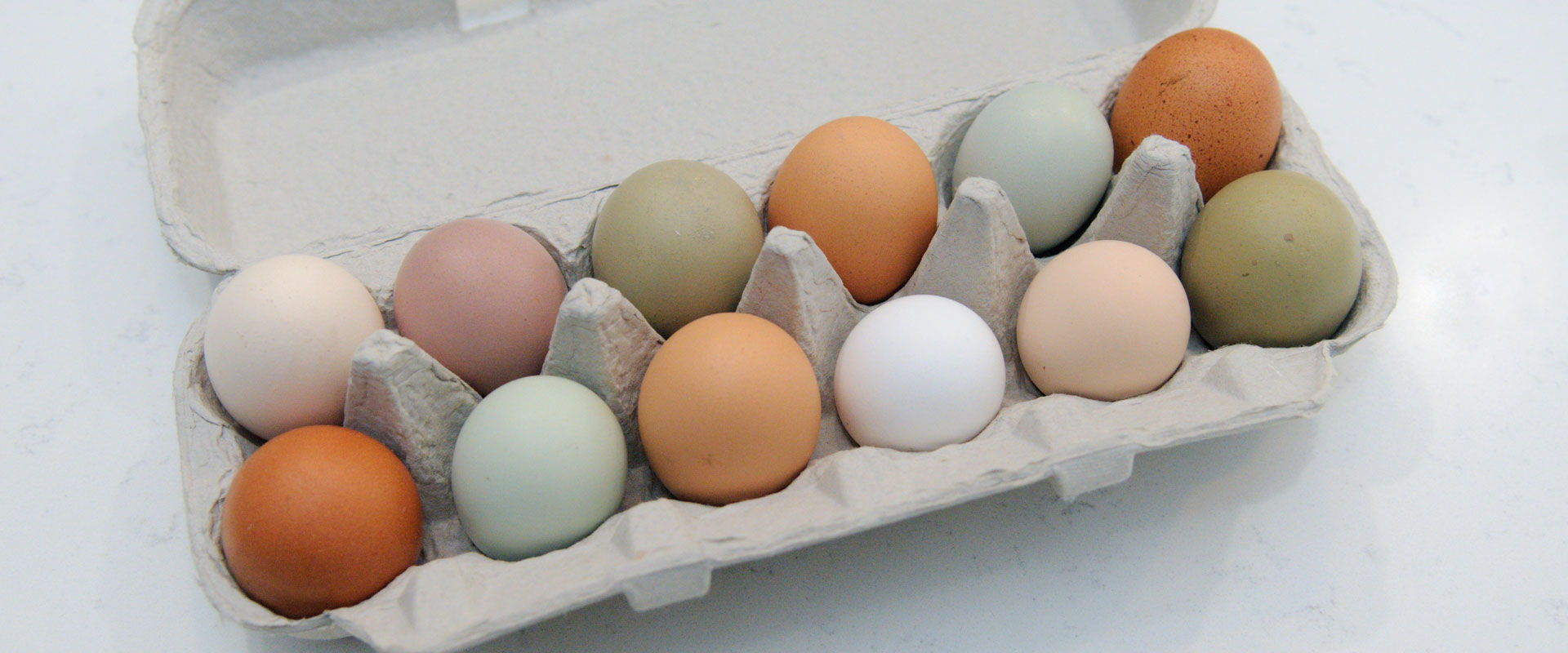
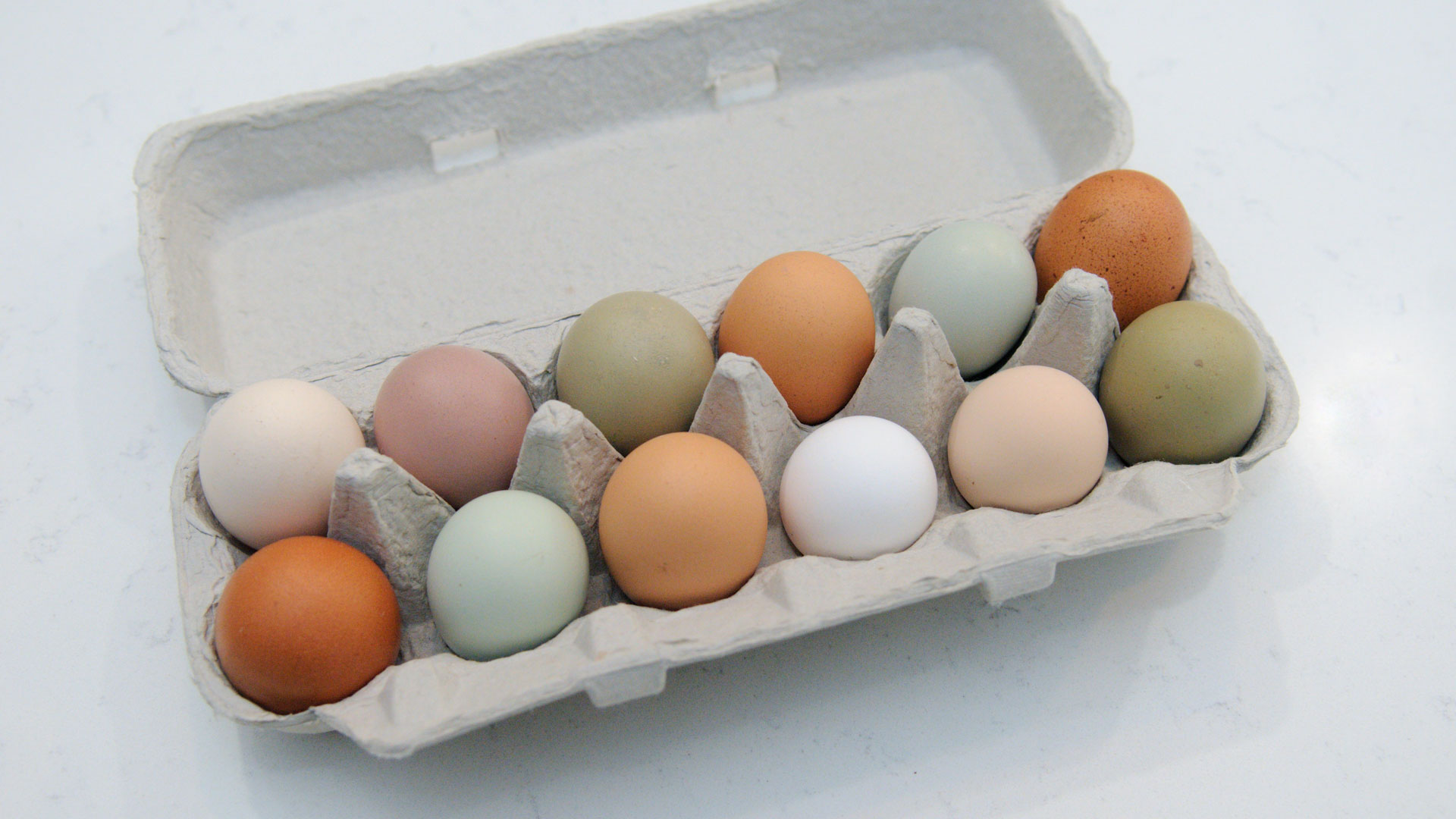
The color of the egg you’re purchasing tells you what the hen that laid it produces. It doesn’t necessarily tell you exactly what color a female offspring will eventually lay. Egg color is influenced by genetics from both parents, and shade and intensity can vary between individual hens and over the laying cycle. This is particularly worth remembering when purchasing eggs from projects involving blue, green, olive, or very dark brown eggs.
A Note About Easter Egger and Olive Egger Crosses:
If you’re buying Easter Egger or Olive Egger hatching eggs, ask what generation the cross is.
With a first-generation (F1) cross, the breeder can select parent breeds so that all offspring are expected to inherit the blue egg gene and therefore lay blue/green or olive-toned eggs, depending on the cross.
Once those offspring are bred into a second generation (F2) or later, inheritance becomes less predictable. Some offspring may not inherit the blue egg gene at all and can go on to lay brown eggs instead.
That doesn’t mean there’s anything wrong with the bird or that it isn’t an Easter Egger or Olive Egger. It’s simply how the genetics work. In my opinion, some of the most beautiful eggs come from second generation and later Easter and Olive Egger hens.
If future egg color matters to you, ask the breeder what they’re breeding toward and what results they typically see rather than assuming the shell in your hand is a guarantee.
How Old Are the Eggs?
Hatching eggs don’t stay equally viable indefinitely. It’s reasonable to ask approximately when your eggs will be collected and how old they’re expected to be when you receive them. That doesn’t mean every egg needs to have been laid yesterday. Breeders need time to collect enough eggs to fill an order, especially from smaller breeding groups.
How Old Are the Hens?
The age of the breeding females can affect hatchability too.
Eggs from pullets that have only recently started laying are usually smaller than the eggs they’ll produce once their reproductive system has matured. Those early pullet eggs can have lower hatchability, and chicks that do hatch from very small eggs may also be smaller and/or weaker than chicks hatched from a full size egg.
That doesn’t mean a breeder should never hatch a pullet egg, but if the birds have only just started laying and their eggs haven’t reached a more typical size yet, hatch results may not be as good as they’ll become later in the season.
At the other end of the spectrum, older hens can also produce eggs that are more difficult to hatch successfully. Eggshell quality tends to decline with age, including thinner shells in some birds, and other age-related changes to the egg can affect embryo survival and hatchability.
There’s no single perfect age that applies to every species, breed, or individual bird. The point isn’t to avoid every young or older breeding female. It’s simply another useful piece of information when you’re trying to understand what may affect your hatch.
If the breeder tells you their breeding females are very young and have only recently begun laying, it may be worth waiting until their eggs have reached a more typical size before ordering hatching eggs.
Local Pickup or Shipping?
If you’re close enough to collect your eggs directly from the breeder, you remove one major variable from the process: shipping. That doesn’t guarantee a successful hatch, but it does mean the eggs haven’t had to travel through the postal system. Shipped hatching eggs are common, and plenty of keepers successfully hatch them. They’re also a bigger gamble.
Shipped Eggs Come With Additional Risk
Once a parcel leaves the breeder’s hands, a lot can happen to it. Packages can be dropped, shaken, delayed, exposed to temperature extremes, or otherwise handled in ways that aren’t particularly friendly to a developing embryo.
Shipping can damage the internal structures of an egg without visibly cracking the shell. Air cells may become loose, detached, or misshapen, and other damage may not be obvious from the outside at all. A breeder can package eggs extremely carefully. They cannot ride along with the parcel and supervise what happens to it. If you’re purchasing shipped hatching eggs, that additional risk is part of what you’re accepting.
Ask How Shipping Works
If the breeder offers shipping, read their shipping information before ordering. You’ll want to understand things like how the eggs are packaged, which shipping service is used, whether tracking is included, and what happens if a parcel is delayed, damaged, or lost. You should also know who is responsible for shipping costs if replacements are offered.
Policies vary considerably between breeders, so don’t assume one breeder’s policy applies to another.
No Hatch Guarantee Is Normal
This one is important:
A breeder not guaranteeing your hatch rate is not, by itself, a red flag.
There are simply too many things outside the breeder’s control once the eggs leave their possession.
Transportation, storage, incubator accuracy, temperature, humidity, turning, power interruptions, handling, and plain old biology can all affect the final result. Even eggs incubated under excellent conditions don’t always have a 100% hatch rate. A breeder can responsibly manage their breeding flock, collect and store eggs appropriately, package them carefully, and send you perfectly viable eggs. They still can’t guarantee what will hatch in your incubator.
Read the breeder’s hatching egg policy before you purchase so you know what they do and don’t guarantee.
A Failed Hatch Doesn’t Automatically Mean the Eggs Were Infertile
This is an important distinction from fertility versus hatchability.
If an egg doesn’t produce a baby, that alone doesn’t tell you why. The egg may never have been fertile. Development may have begun and stopped very early. Shipping may have caused damage. Storage or incubation conditions may have affected development. Depending on when development stopped, it may be difficult for a keeper to determine exactly what happened. This is particularly important with shipped eggs, where there are additional variables neither the keeper nor breeder can completely control.
A disappointing hatch is frustrating, but the final hatch rate alone doesn’t necessarily tell you whether the breeder’s flock had a fertility problem.
What Can You Reasonably Expect From the Breeder?
While a breeder can’t promise that every egg will hatch, you can still expect them to accurately represent what they’re selling. That includes being clear about the breeding group the eggs came from, following whatever collection, storage, packaging, and shipping practices they’ve told you they use, and being upfront about their policies.
If they make a specific guarantee, they should honor the terms of that guarantee. Beyond that, there has to be some acceptance that hatching eggs involve uncertainty.
You’re buying hatching eggs, not pre-ordered babies in shells.
Have Your Incubator Ready Before the Eggs Arrive
The time to figure out whether your incubator works isn’t after the eggs are sitting on your counter. Have your equipment set up and running ahead of time. Make sure you understand the incubation requirements for the species you’re hatching and have a way to verify that your equipment is operating as expected. Chicken, duck, goose, turkey, quail, and other poultry eggs don’t all have identical incubation requirements.
Use a reliable incubation resource for the species you’re hatching rather than assuming one set of instructions applies to everything with a shell.
This guide isn’t intended to teach you how to incubate eggs. That’s something you should be comfortable with before you order them.
Have a Brooder Ready Too
A successful hatch means you’ll very quickly have live animals depending entirely on you. It doesn’t need to be ready and set up the day you put your eggs in the incubator, but have appropriate housing, heat, feed, waterers, bedding, and other supplies ready before hatch day. Don’t wait until the first pip to discover you’re missing something important!
Candle With Realistic Expectations
Candling can help you monitor development, but it doesn’t always give an immediate or perfectly clear answer. Shell color, shell thickness, the stage of development, your equipment, and your own experience can all affect what you’re able to see. Be cautious about declaring an egg infertile too early based solely on what you can see with a flashlight.
If you’re new to incubation, use a reliable species-specific resource to learn when and how to candle safely.
Before You Buy Eggs, Make a Plan for Every Bird That Could Hatch
This matters just as much as your incubator settings. If you set twelve eggs, don’t make a plan for the six females you’re hoping to hatch. Make a plan for twelve birds.
Some may be male. Some may not have the colour, markings, temperament, or other characteristics you hoped for. Some may need to stay with you much longer than expected while you look for another appropriate home, and occasionally a bird may hatch with additional needs that require you to make difficult decisions about its care and welfare.
Once you choose to incubate those eggs, ALL of the birds that hatch from them become your responsibility, not just the convenient ones.
Plan for Males Before You Hatch
Unless you’re working with a sex-linked cross or another situation where sex can be identified at hatch, you may not know which birds are male for some time and, even if you can identify them immediately, you still need somewhere for them to go.
The Rooster Registry can be a useful rehoming tool for male poultry in Nova Scotia, but a listing does not guarantee a placement.
You need to be prepared to house and care for every male you hatch for as long as necessary, including the possibility that another home won’t be found. If you cannot do that, hatching may not be the right way to add birds to your flock.
KEEP READING:
Read the Breeder’s Policies Before You Buy
Before placing your order or paying, make sure you understand what happens if:
• Eggs arrive cracked or damaged.
• A shipment is delayed or lost.
• Few or none of the eggs develop.
• You receive fewer eggs than expected.
• The breeder needs to delay your order because their birds aren’t laying enough.
• You need to cancel or change your order.
Not every breeder will have the same answer. That’s okay. The important thing is knowing what you’ve both agreed to before the eggs are shipped or collected.
Hatching Eggs Are a Gamble
That’s part of what makes hatching exciting, but it’s also something to take seriously. The breeder controls their breeding flock and how the eggs are handled while they’re in their care, the keeper controls what happens after the eggs arrive, and some things are simply outside everyone’s control.
A good hatching egg purchase isn’t one where somebody promises you a perfect hatch. It’s one where the breeder is clear about what they’re selling, the keeper understands what they’re buying, and both have realistic expectations about what can happen next.
Ready to Find Hatching Eggs?
Browse Nova Scotia poultry breeders and see who’s offering the species and breeds you’re looking for.
This guide is provided by Feathered Fundamentals, a Nova Scotia poultry education project helping keepers build the knowledge and confidence to care for their birds well.